Lead Generation vs Ecommerce: Which Strategy Fits Your Business Best?

Published by grace • October 14, 2026

Treating lead generation and ecommerce campaigns the same way is the fastest path to wasting your advertising budget. Running the same strategy for both can lead to poor results across the board. These two models require distinct approaches due to fundamental differences in their conversion goals. Lead generation wants to capture contact information to reach out later, while ecommerce focuses on immediate product purchases.

Understanding the difference between ecommerce vs lead generation is critical for success. The average Google Ads conversion rate sits at 7.52% and cost per lead at $70.11. The right ecommerce lead generation strategies matter substantially. We’ll walk you through the core differences between these models, how they affect your marketing strategy, and which approach fits your business best.

What is lead generation

Lead generation revolves around identifying and attracting potential customers who show interest in a product or service. The model focuses on capturing valuable contact information such as names, email addresses and phone numbers, which can be nurtured into sales opportunities. No sale occurs during the first conversion. The lead has provided information or made contact with your business instead.

The process has multiple stages. Businesses use marketing strategies like content marketing, SEO, social media and paid advertising to capture attention. Visitors are encouraged to interact through forms, subscriptions or promotional signups once they engage. These contacts then move through qualification, where criteria like demographics and engagement level determine which prospects are most likely to convert. The relationship continues through personalized content and consistent communication designed to move leads closer to purchase.

What is ecommerce

Ecommerce covers the buying and selling of goods and services over the internet. It includes everything from browsing products and adding items to a cart, to secure payment processing and delivery. The transaction happens online, with customers completing purchases through websites, marketplaces or social media platforms.

The ecommerce system runs on web technology, data management and security tools. Product databases store details and inventory, while payment gateways process transactions with encryption. Business models vary and include B2C where companies sell directly to individual customers, B2B with sales between businesses, and D2C where manufacturers bypass retailers.

Core differences in how they work

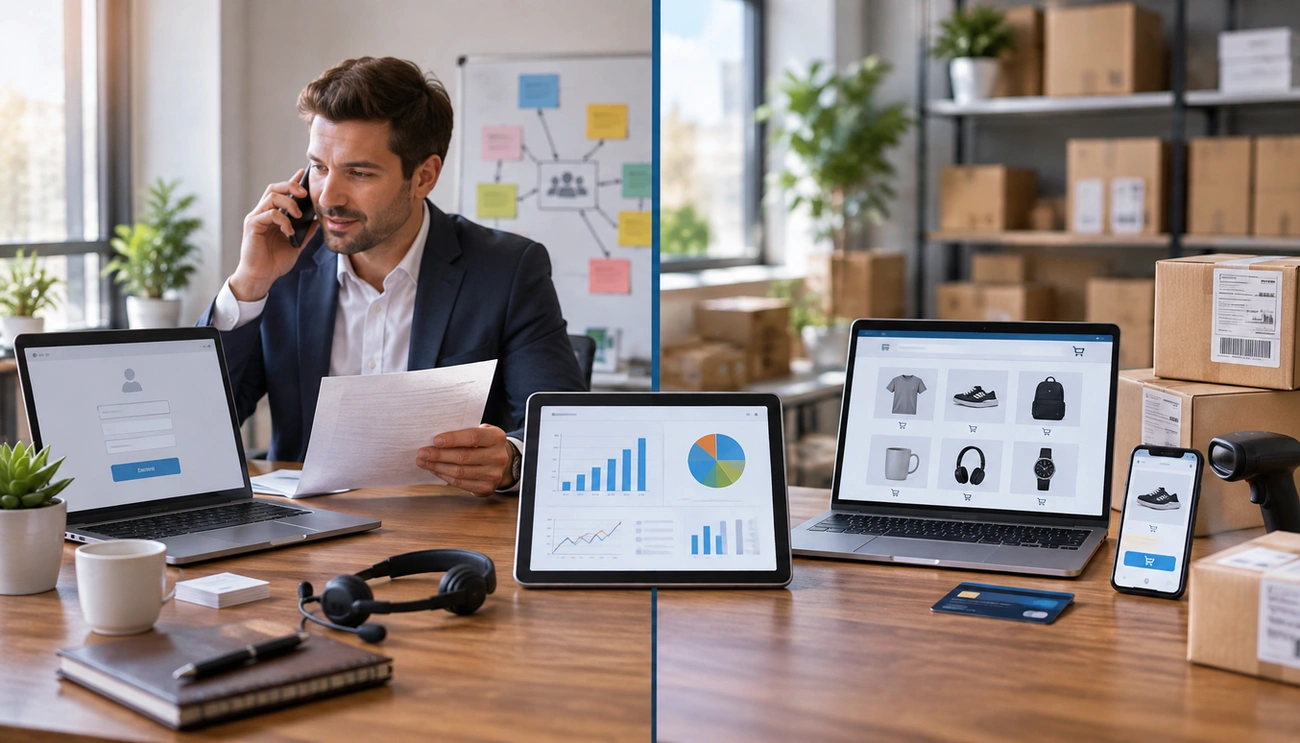
Lead generation businesses sell a conversation. The conversion is a form fill, phone call or booking request, with the actual sale happening later through a sales process. Ecommerce businesses sell a product directly. The conversion is a purchase that happens on the website, with revenue trackable right away.

Lead gen covers complex products or services that need explanation, so the marketing model educates people and starts dialog. Ecommerce makes sense when products are self-contained and simple enough to explain quickly. The sales cycle is different: lead generation often takes longer but produces higher revenue per sale, while ecommerce focuses on immediate transactions with shorter customer experiences.

How Lead Generation vs Ecommerce Affects Your Marketing Strategy

Strategic decisions around lead generation vs ecommerce shape every aspect of your marketing execution. How you track success and where you allocate dollars depend on these models that just need different approaches.

Customer journey and sales cycle

Lead gen sales cycles stretch across weeks or months. Someone clicks your ad Monday, browses your site, returns via organic search Thursday, and calls the following week. Google’s default conversion window is 30 days, which works to most lead gen businesses. But high-value B2B services with 60 or 90-day cycles need extended windows to avoid under-reporting campaign value.

Ecommerce operates on compressed timelines. Impulse purchases convert in the same session. Considered purchases like furniture or electronics might take a week or two. The challenge isn’t cycle length but attribution across multiple touchpoints before purchase.

Conversion goals and metrics

Ecommerce campaigns optimize toward transactions with known values at conversion. You can calculate ROAS the same day your ad runs. Lead generation optimizes toward form submissions or calls that represent the start of a sales process. Revenue may not materialize for months, and many leads never convert at all.

This creates a measurement gap. Ecommerce sites convert 2.86% of paid search traffic compared to 0.47% that lead generation landing pages convert. Optimizing cost per lead without understanding lead quality guides campaigns to generate plenty of leads that sales teams cannot convert.

Search intent and targeting approach

Ecommerce targets people who know what they need. Lead gen targets people who know they have a need. This subtle difference drives everything from ad copy to landing page design. With lead generation, you help prospects understand what they need. With ecommerce, you explain why they should buy from you.

Budget allocation priorities

Lead gen budgets concentrate where intent is highest. Search campaigns targeting service-specific keywords get the largest share. Ecommerce distributes budgets more broadly because multiple campaign types contribute to revenue: Shopping captures high-intent searches, remarketing recovers browsers, and prospecting scales once core campaigns prove profitable.

Key Marketing Differences Between Lead Generation and Ecommerce

The execution layer reveals where lead generation vs ecommerce strategies diverge most dramatically. Design choices, messaging frameworks and tracking systems operate on different principles.

Website design and user experience

Lead generation sites prioritize clarity and credibility. Homepages establish expertise and authority. Messaging focuses on service value rather than product catalogs. Clean layouts contain educational content alongside trust indicators like client testimonials and professional certifications. Each page guides visitors toward a single conversion action without competing pathways.

Ecommerce sites emphasize product visibility and shopping efficiency. Clear product grids, filtering systems and search functionality create a frictionless buyer trip. Navigation supports product discovery. Checkout processes minimize steps between cart and completion.

Content and messaging approach

Lead gen content demonstrates authority through expertise articles and educational resources. The messaging addresses pain points and positions services as solutions. Copy establishes the business as a reliable expert. Trust builds through informative material rather than sales pressure.

Ecommerce content centers on product details and benefits. Descriptions highlight features and use cases. Copy creates momentum toward immediate action.

Campaign structure and ad copy

Lead generation campaigns group keywords tightly by service line. This allows each ad group to map to distinct commercial goals. Search campaigns dominate because intent signals determine lead quality.

Ecommerce spreads across Shopping campaigns and Search. Product feeds drive Shopping performance through titles, descriptions and pricing data.

Conversion tracking and analytics

Lead gen tracking requires offline conversion integration between CRM and advertising platforms. Without it, you only see form submissions, not the actual revenue that follows weeks later. Phone call tracking captures conversions that standard tracking misses.

Ecommerce tracking captures transaction data: revenue, products purchased and order values. The purchase event provides structured data the same day ads run.

Landing page requirements

Lead generation pages feature one offer, one form and one call-to-action. Navigation disappears to eliminate exit paths. Form length balances completion rates against lead quality. Shorter forms generate more leads but longer forms produce better-qualified prospects.

Ecommerce landing pages provide product imagery, pricing and availability. Every missing element creates hesitation that kills sales.

Which Strategy Fits Your Business Best

Your business characteristics determine whether generating contacts or ecommerce serves you better. Product complexity, sales requirements and industry factors clarify which model fits when you review them.

Product complexity and pricing

Simple products work well with ecommerce. A T-shirt needs minimal explanation: people either want it or they don’t. Ecommerce makes sense when products are self-contained and easy to explain on a page or two. Services that just need custom pricing or detailed explanation require contact generation. Plumbers must review situations before they provide estimates. Software companies run demos to showcase features. Agencies like Disruptive craft custom proposals after they learn about client businesses.

Sales process requirements

Ecommerce fits products customers can purchase without consultation. Contact generation works when you just need conversation before closing. Capturing contacts first performs better if your offer requires quotes, demos or individual-specific solutions.

Industry and market thoughts

Most B2B marketing falls into contact generation due to complex sales cycles. Service-based businesses typically just need contact generation. Product-based retailers use ecommerce.

Combining both strategies when it makes sense

Many businesses benefit from hybrid approaches. Online stores sell directly and capture emails for promotions. Software companies offer free trials, then direct qualified contacts toward paid plans. Testing both paths reveals which generates better revenue.

Conclusion

Understanding the difference between lead generation and ecommerce shapes your marketing success. We’ve seen how each needs unique approaches to tracking and messaging instead of treating them the same way.

Choose lead generation when your products need explanation and conversation. Ecommerce works better when customers can purchase on their own. Many businesses benefit from combining both strategies and test to find which path gets better revenue to suit their situation.