pactx
  • Approach
  • Services
    • Analytics
    • Content Creation
    • Conversion Optimization
    • Digital Growth
    • Email Marketing
    • Front End Development
    • Performance Marketing
    • Search Engine Optimization
    • Generative Engine Optimization
  • Case Studies
    • Partners
  • Who We Are
  • Contact Us

Top SEO Trends for the Holiday Season: Your 2026 Guide to Crushing Sales

Published by grace • October 19, 2026

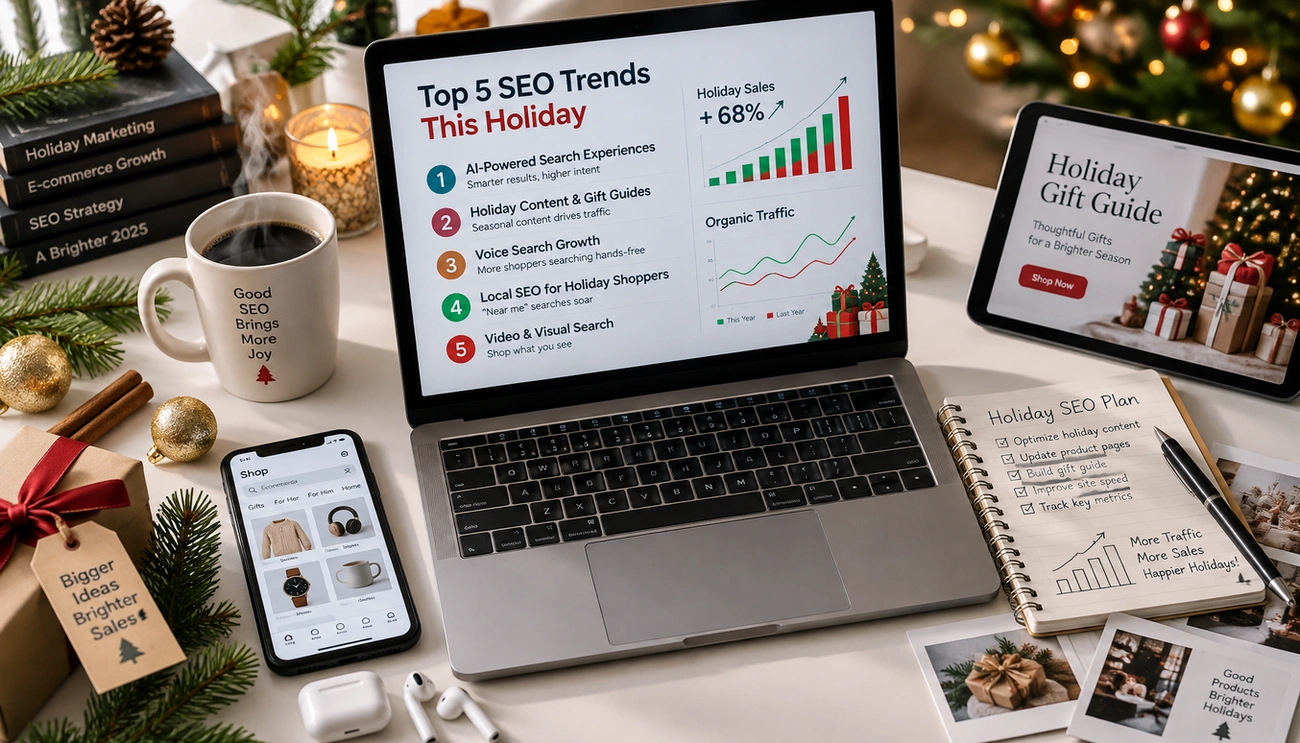
Top SEO Trends for 2026 Holiday Season

The top SEO trends for the 2026 holiday season reveal a critical window: starting your optimization 45 days in advance can capture 90% of holiday traffic. Wait until one week before and you’ll only reach 50% of potential shoppers. The stakes are higher than ever as search behavior continues changing in a variety of platforms. Product searches now begin on TikTok (11%) and Instagram (15%). It also expands the SEO battleground beyond Google.

Understanding what SEO trends 2026 brings is vital for holiday success. I’ll walk you through the top SEO trends for 2026 that will define holiday sales in this piece. You’ll learn about AI-powered search and multi-channel optimization. I’ll show you when and how to implement them for maximum revenue.

AI Search and Generative Answers

AI-driven traffic to retail sites grew 127% year-over-year in August 2026. Projections show 130% overall growth through the holidays. This change goes beyond simple traffic numbers. Shoppers helped by AI tools show 69% less likelihood of returning purchased items. This translates to higher profit margins on every sale. Google AI Overviews now appear in 55% of all searches. More than half of your potential customers encounter AI-generated answers before seeing traditional organic results. ChatGPT alone reaches 800M+ weekly active users, and many use it for product research and comparisons. The measurement has changed from click-through rates to citation share, which tracks how often your brand appears as a source in AI-generated answers.

Multi-Channel Search Behavior

Paid search posted modest gains while natural search declined. This highlights a clear change toward partner and social-led acquisition channels. Affiliates, partners and social networks now drive the strongest revenue share growth in 2026. This multi-channel behavior extends throughout the customer experience. Shoppers no longer follow linear paths from search to purchase. They browse Instagram and validate on TikTok. They compare prices through ChatGPT, then complete transactions wherever convenience strikes. Omnichannel patterns show that only 12 percent of consumers make spontaneous purchases. Most combine online research with in-store validation before buying.

Brand Authority and E-E-A-T Signals

Trust stands as the most important member of the E-E-A-T family. Google’s automated systems identify content that demonstrates experience, expertise, authoritativeness and trustworthiness through multiple factors. These signals include transparent contact information, HTTPS encryption, accurate citations and balanced customer reviews. Brand authority shows through branded search volume, unlinked brand mentions, quality backlinks from authoritative sites and social engagement. AI systems favor recognized brands when generating answers. Brand-building work affects both traditional SEO and AI visibility.

Voice and Visual Search Growth

Voice search accounts for 30% of all AI answer engine interactions. This is powered by 8.4 billion active voice assistants worldwide. Voice queries now represent 31% of all searches, and 62% of US adults use voice search at least weekly. Visual search shows 36% of consumers have used it. 62% of millennials want visual search functionality over any other technology. Voice searches average 29 words compared to 4 words for typed queries, and 70% are phrased as complete questions. This conversational change requires content structured around natural language patterns rather than keyword strings.

When to Start Your Holiday SEO Campaign

SEO requires eight weeks or more just to index a page. Waiting until Q3 creates a sprint to the finish line under those circumstances. I recommend launching holiday SEO campaigns in Q1 if you have technical optimizations planned. Shoppers research purchases earlier each season and early preparation becomes non-negotiable.

Review and update seasonal pages during summer, with major changes live by late August or September. This timeline gives search engines weeks to crawl and review your pages before peak season. October becomes late for competitive organic searches, though you can still sharpen existing pages and internal links.

Analyzing Last Year's Performance Data

Pull Search Console data to identify seasonal keyword trends, customer questions, and current search results. Track organic traffic, click-through rates, keyword rankings, and conversion data to spot performance patterns. Look at the last two to three years of store data and focus on promotional campaigns and which dates drove the strongest results.

Revenue and conversion data by landing page reveals which holiday content performs best. Similarly, paid search terms prove commercial just need and inform organic targeting decisions.

Building Your Holiday Keyword List

Create your holiday list first, then research keywords for products, categories, common questions, and blog posts like “Best Gifts For [Holiday]”. Target both holiday and gift keywords and drill down to find the most relevant search terms. Some phrases face high competition, but focus on attainable rankings based on search volume and realistic positioning.

Group keywords by shopper’s intent before assigning them to pages. Match each keyword with the most relevant page type based on what the searcher wants to accomplish.

Creating a Seasonal Content Pipeline

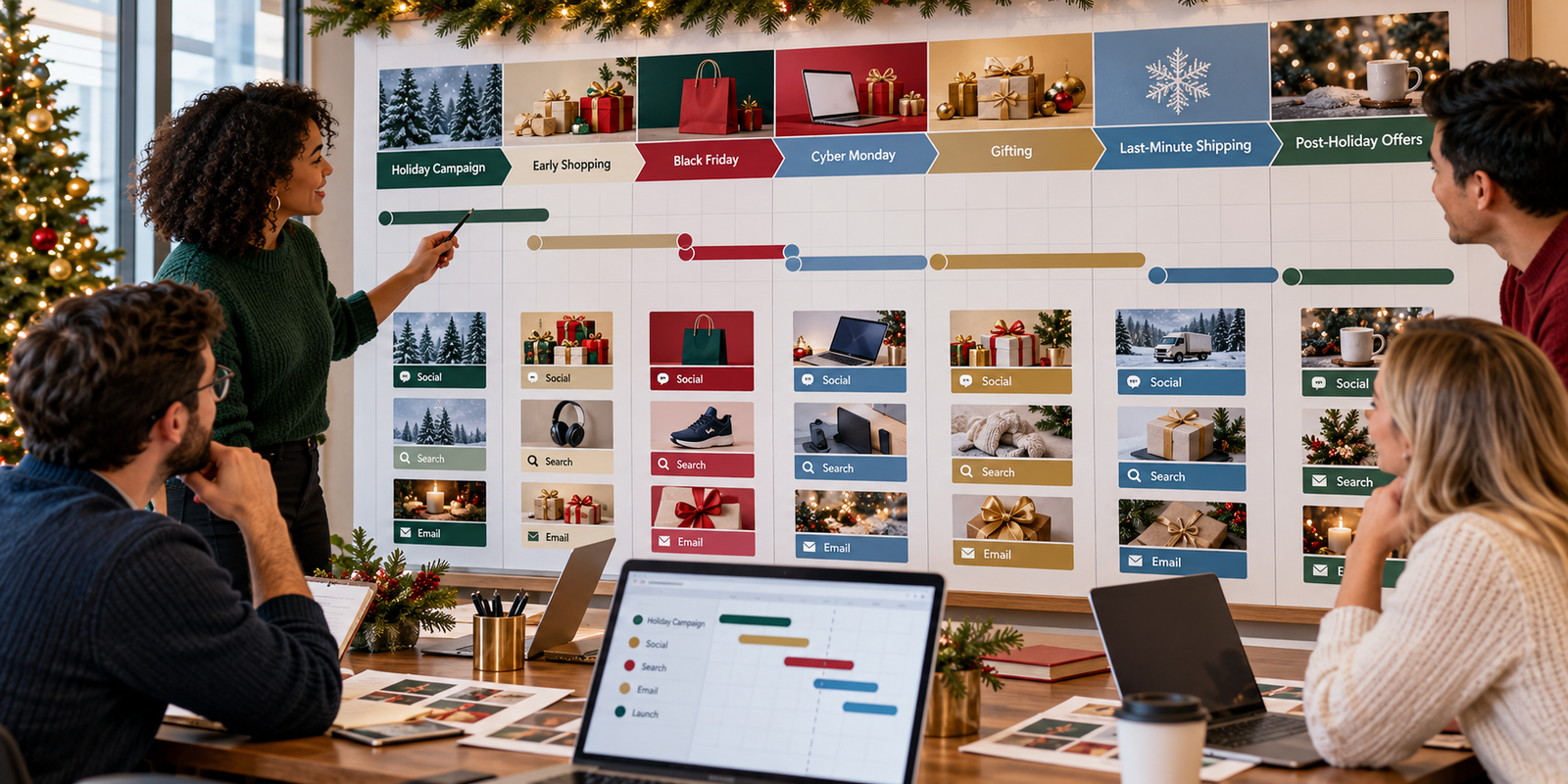
Build content two to three months before major moments to give creators time to test and deliver natural-feeling assets. A content pipeline will give you the right content for the right channel at the right time. Map your holiday marketing calendar well in advance and line up with marketing, merchandising, and sales teams.

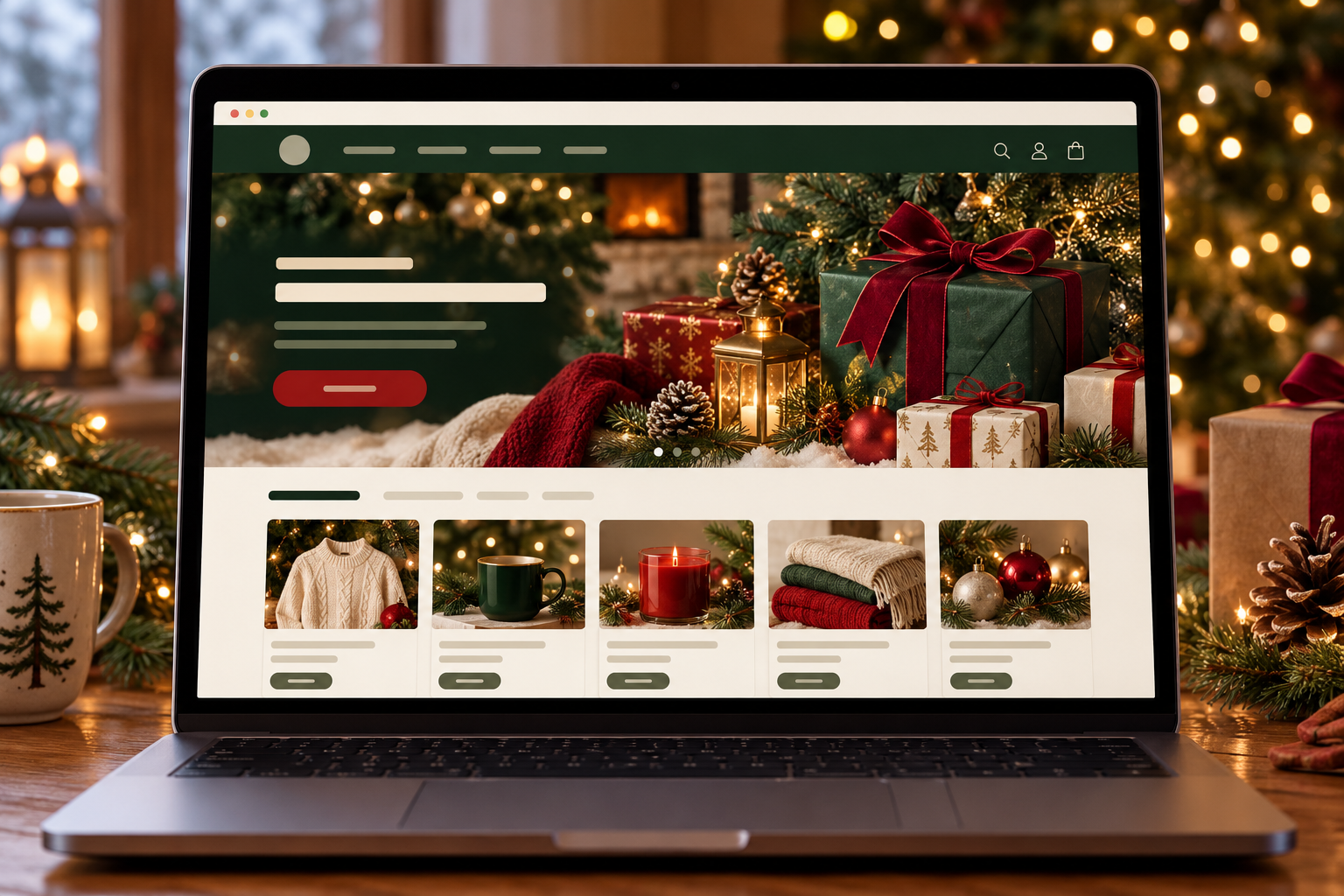
Holiday-Specific Landing Pages and Gift Guides

Seasonal landing pages make offers more relevant by targeting holiday-specific trends. Mobile shopping reaches all-time highs during holidays. This makes mobile-responsive design with fast load times critical. Countdown timers push shoppers to act quickly by highlighting limited-time offers. Gift guides simplify decision-making for overwhelmed shoppers. They organize products into clear categories based on recipient, price point, or interest. A standalone gift guide landing page captures traffic from every channel and gives shoppers an easy path from browsing to checkout.

Product Schema and Rich Results

Product schema makes rich results possible. These show price and review ratings in search results. Rich results outperform standard results with 30%+ higher click-through rates. The markup uses Product and Offer types to qualify listings. Price mismatches between schema and visible page remain the most common reason rich results get dropped.

Category Pages vs Product Pages Performance

Organic search drives 33% of all eCommerce traffic. Category pages rank for hundreds of related keywords at once and capture users at every stage. Product pages target specific search terms used by people who know what they want.

Mobile Speed and User Experience

53% of users abandon sites that take over 3 seconds to load. Mobile pages that load one second faster experience up to a 27% increase in conversion rates. Core Web Vitals determine mobile performance. These include Largest Contentful Paint, Interaction to Next Paint, and Cumulative Layout Shift.

Image and Video Optimization

Product images dominate page weight on eCommerce sites. Compress images without sacrificing quality. Use descriptive alt text with product keywords and serve images in WebP or AVIF formats. Multiple product angles increase sale likelihood.

Balancing PPC Budget Throughout the Season

Stop adjusting budgets based on daily performance fluctuations. Instead, maintain consistent ROAS or CPA targets regardless of volume changes. Adjust ad schedules rather than budgets to accommodate business operations, such as weekend closures or short fulfillment cycles.

Paid Data Informs Organic Strategy

PPC validates keywords for organic content priorities right away. High-performing paid keywords with strong conversion rates signal which terms deserve SEO investment. Test headlines and calls-to-action through ads first and apply winning language to meta descriptions and title tags. Geographic and demographic data from paid campaigns refines organic targeting strategies.

Website Visitors Get Retargeted on Social Platforms

Retargeting re-engages visitors on Facebook, Instagram and TikTok using pixel-based tracking. Segment audiences by behavior: broad website visitors from the last 30 days, high-intent visitors who viewed pricing or cart pages within 7-14 days and social engagers from the past 30-90 days. Always exclude recent converters to avoid wasted spend.

Last-Minute Keyword Opportunities

Less than half of holiday shopping completes by December 1. Target panic buyers with digital gift cards and dedicated last-minute gift sections. Product ads drive a 35% increase in clicks and 62% boost in conversions. Local inventory ads capture Super Saturday shoppers searching “near me” queries.

Conclusion

Holiday SEO success in 2026 requires preparation months in advance, not weeks. The move toward AI-powered search, multi-channel behavior, and brand authority signals demands a different approach than traditional optimization alone. Start your campaigns in Q1 and build content pipelines by summer. Combine paid data with organic strategy. Note that early preparation captures 90% of holiday traffic, while last-minute efforts leave revenue on the table. Plan ahead, optimize well, and watch your holiday sales climb.

Previous page Previous Post
pactx
LinkedIn Icon
  • Help
    • Contact Us
    • Privacy Policy
    • Do Not Sell My Information
    • Terms of Service
  • Company
    • Who We Are
    • Case Studies
    • Careers
    • Sitemap
  • Resources
    • Get a Quote
    • Blog